STORY_08

Why I matter / an incomplete autobiography

The story starts with a whistle. It doesn’t stop there.

Eight chapters about signals, systems, consequences, and the instinct to keep building.

Explorer. Hacker. Programmer. Author. Radio amateur.

Some people know me as Cap’n Crunch. Some know me as the guy with the blue box. A few know me as the guy who still spends nights watching the ionosphere to figure out where a radio signal can go. All of that is true, and none of it is the whole story.

CH / 011950s—early 60s

The Early Years

Long before there was a blue box, there was a kid with a screwdriver and no patience for being told how something worked. I took apart radios. I built crystal sets—no battery, no amplifier, just a coil, a crystal detector, and a single earpiece pulling a signal straight out of the air.

That was the first time I understood, physically, that information was riding on a wave, waiting for someone curious enough to go find it. By high school, that restlessness had turned into a ham radio license and my own call sign: WB6EWU.

Information was riding on a wave, waiting for someone curious enough to go find it.
CH / 021960s

United States Air Force

The Air Force is where taking apart radios in my bedroom turned into working on radar and communications systems at a scale most people never see. Curiosity about signals stopped being a hobby and became training. Big, complicated electronic systems were still just systems. They could be learned.

I joined by choice during the Vietnam era and asked for electronics, radio communications, or radar—anything that put me inside the equipment. After electronics training at Keesler Air Force Base, postings took me to Alaska and Maine. I finished my service maintaining GATR ground-station radios that kept pilots and operations in contact.

CH / 03Late 1960s—70s

The Telephone Network, 2600 Hz & the Whistle

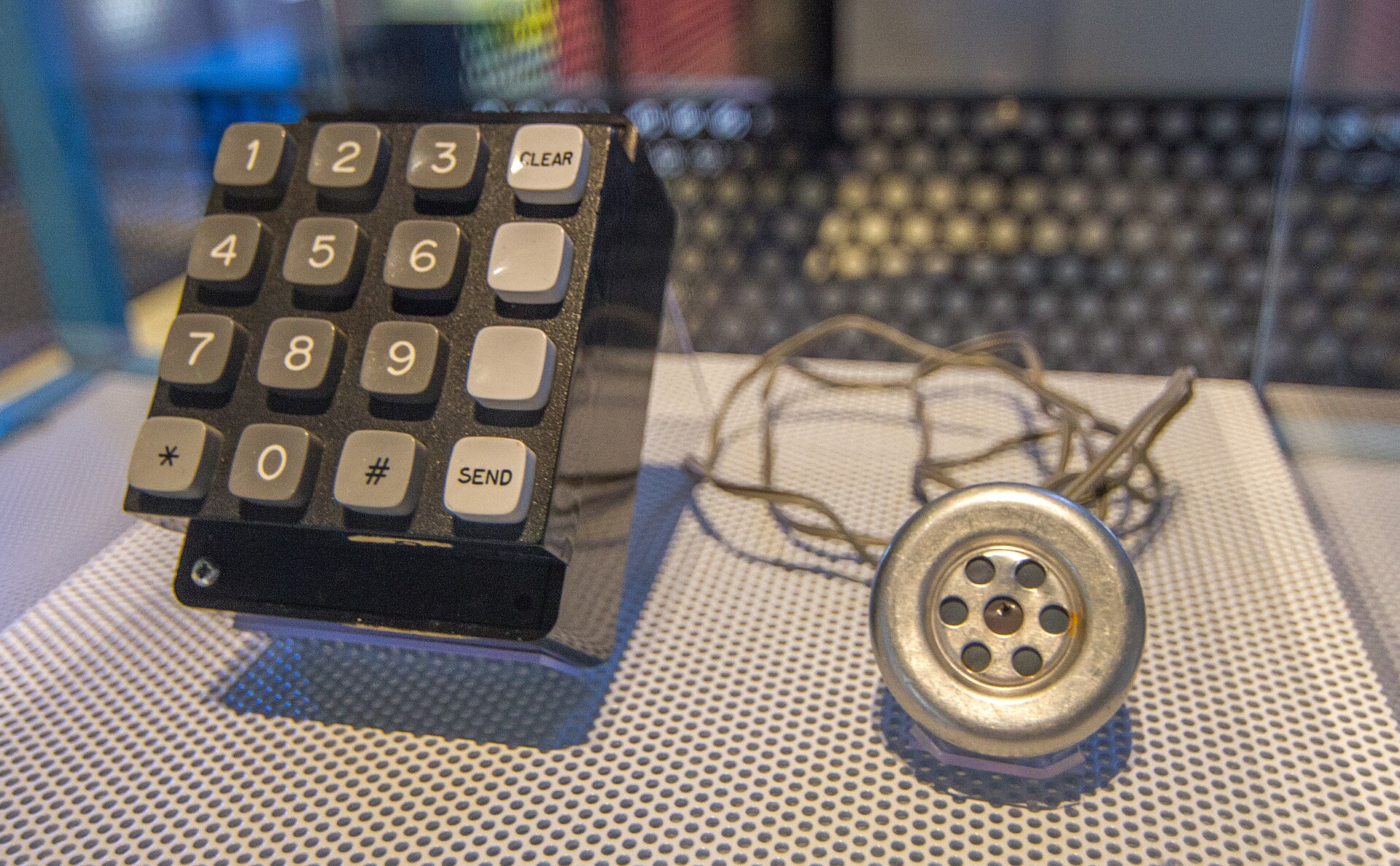
A preserved telephone blue box
A blue box preserved at the Powerhouse Museum

After the Air Force, the telephone network became the next enormous machine to figure out. A toy whistle packed in Cap’n Crunch cereal happened to produce a tone at exactly 2600 Hz. That was the tone AT&T’s long-distance network used internally to signal that a trunk was free.

I took phone trips from Mountain View into small towns, dialing and listening to the clicks, beeps, and chirps of calls being assembled. The point was never a single trick. It was learning that something as fixed and untouchable as a nationwide network was a system with rules—and that you could have a conversation with the machine instead of merely using it.

Anyone can learn a trick. Understanding the system was the actual discovery.
CH / 04Early 1970s

Phone Phreaking & the Blue Box

I wasn’t the only one who had figured out that the phone system had a back door. A small, scattered community of phone phreaks traded what they learned about tones, trunks, and switching equipment—early hacker culture before anyone called it that.

The blue box grew out of that community: a small electronic instrument that generated 2600 Hz and the multi-frequency signaling tones on demand. The network responded because, as far as the switching equipment could tell, it was hearing another part of itself.

CH / 051971—75

Steve Wozniak & Steve Jobs

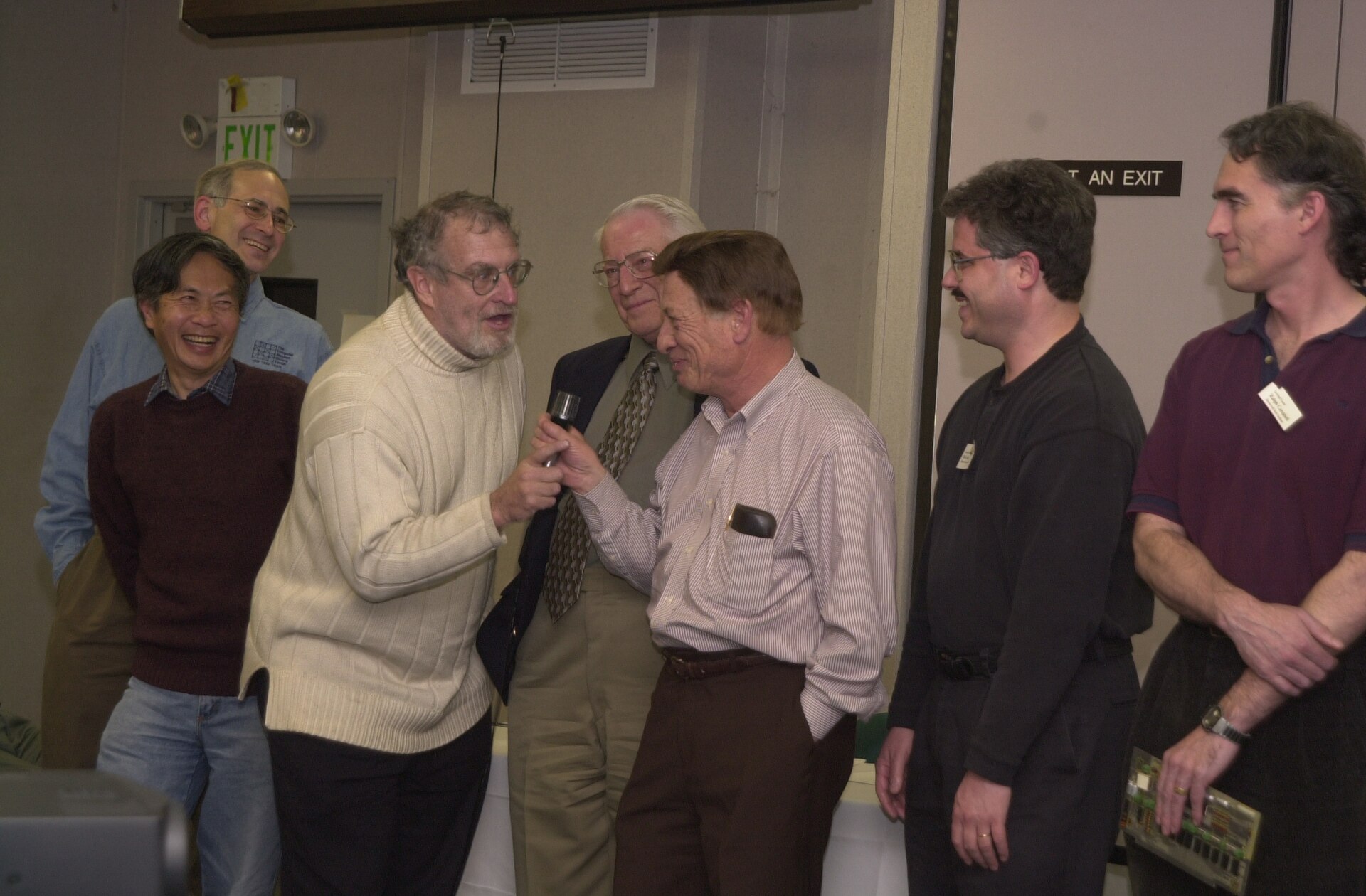
Homebrew Computer Club members at a 2001 reunion
Homebrew Computer Club reunion, 2001 · John Draper third from left

In October 1971, Esquire published ‘Secrets of the Little Blue Box.’ A couple of years later, KPFA invited me on air to demonstrate what a blue box could do. Steve Wozniak was listening. He contacted the station, the station contacted me, and I ended up calling his dorm at UC Berkeley.

Woz built his own digital blue box; Jobs helped sell them. I later told Woz about the Homebrew Computer Club, whose first meeting he attended in March 1975. I didn’t build Apple, but I was part of the world that helped produce the people who did—and that thread is worth pulling on.

CH / 061970s

The Bust, the Arrest & Lompoc

Eventually it caught up with me. A rejected signal produced a trouble record; an acquaintance’s notes connected ‘Captain Crunch’ to my name; and the FBI began its investigation. I was arrested on my way home from class after grand-jury subpoenas had gone to people in my circle.

That first case ended with probation and a fine. What came later, including Lompoc Federal Prison, is a longer chapter still being written for this archive.

CH / 07Late 1970s—80s

Personal Computing & EasyWriter

Somewhere in there, I stopped only exploring technology and started building it. EasyWriter was among the first word processors available for personal computers—real, shipped software people used when the personal computer itself still seemed like a strange idea.

The person who learned to talk to a telephone network by ear turned around and wrote software people relied on. Exploring and building were never two phases of my life. They were always the same instinct pointed in different directions.

Exploring and building were always the same instinct.
CH / 08Then—now

Hacker Culture & Around the World

The small phone-phreak community didn’t stay small. It grew into hacker culture: conferences, gatherings, and lasting arguments about curiosity, ethics, and where the line should be.

I’ve spent years on planes and in conference halls—giving talks and interviews on more continents than I expected to see as a kid with a soldering iron. But the story never ended with the blue box. The next chapter is happening now.

Then became now.

See what’s on the bench